
Getting ready for a trip always brings a distinct energy into the house—suitcases open on the floor, clothes being sorted, and schedules shifting. While we are focusing on our packing lists, our dogs are quietly picking up on these subtle changes long before we ever reach for the door handle.
For those of us who go the extra mile to keep our dogs healthy and thriving, leaving them behind can bring up a lot of hesitation. It takes a massive amount of trust to hand over your dog’s daily routine, fresh food protocol, and lifestyle to someone else. Finding “the one”—that magical caretaker who checks every single one of your boxes—can honestly feel like hunting for a unicorn.
Having owned and run a professional pet-sitting business, I have seen firsthand how much a caretaker’s presence ripples into a dog’s daily life. True wellness isn’t just about physical health; it’s about making sure your dog feels safe, happy, and relaxed. By prepping both your dog and your environment ahead of time, you can make sure your pup stays completely calm and settled while you are away.
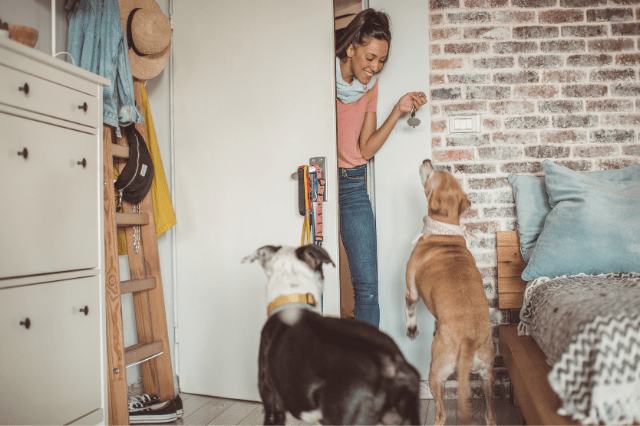
In my years managing pet care, I heard it all from well-meaning owners: “Oh, my dog is perfectly house-trained, never barks, never chews things, and sleeps right through the night.” And at home, in their normal routine, that is 100% true.
But when a dog is dropped into an entirely new environment or left with a new person, the rules change.
A dog who is an absolute angel in their own living space can suddenly experience separation anxiety. They might do a total 180—whining at the door, barking at every sound, pacing, having accidents, or refusing to eat. This doesn’t mean they are a bad dog. It just means they are overwhelmed because their favorite person and their usual routine are suddenly gone. When this happens unexpectedly, it creates a lot of stress for the sitter, your dog, and any other animals in the house.
Because of this, always schedule a short trial run—like a two-hour visit or a single overnight stay—well before your actual vacation dates.
Don’t wait until the week before you fly out. You need to see how your dog actually handles the change while you are still local. If they struggle during the trial run, it gives you plenty of time to pivot to an alternative solution, which usually means having a sitter stay at your house where your dog feels completely secure.
A big part of feeling confident when you walk out the door is choosing an environment that fits your dog’s personality. For a dog that is used to a peaceful, quiet home, a traditional commercial kennel can be a sensory overload. The barking, unfamiliar smells, and rigid schedules can easily stress them out.
Beyond the stress, large commercial facilities often have strict rules that don’t match up with a proactive lifestyle:
The Vaccine & Titer Hurdle: Most commercial kennels require a long, rigid list of up-to-date vaccinations to clear their intake process. If you prefer to run regular titer tests to check immunity rather than over-vaccinating, or if your dog follows a custom, minimal schedule, you will likely find yourself locked out of traditional boarding options entirely.
The Fresh Food Dilemma: If you feed a fresh, raw, or gently cooked diet—or even certain styles of freeze-dried raw—traditional kennels simply will not accommodate it. Their staff is trained to scoop kibble out of large bins, and they don’t have the fridge space, freezer space, or safety protocols to deal with custom fresh meals.
Opting for a more personal setup—either bringing a professional into your house or sending your dog to a private home-boarding environment—is usually a much better experience. Here is how to look at both options:
In-Home House Sitting (The Sitter Stays with You): This is the best way to keep your dog’s day completely normal. They sleep in their own bed, drink their usual water, and stay surrounded by their familiar sights and sounds.
Private Home Boarder (Your Dog Stays with the Sitter): If you prefer not to have someone staying in your personal space, finding a sitter who welcomes dogs into their private home is a wonderful alternative. It keeps things cozy and family-style rather than institutional.
While home boarding is great for many dogs, my time in the pet care industry taught me that certain dogs should almost never leave their own house. If your dog falls into one of these categories, hiring an in-home house sitter is the safest choice for their well-being:
The Flight Risks and Bolters: If your dog is a rescue who panics easily, an escape artist, or a door-dasher, moving them to an unfamiliar house is a massive safety risk. When a dog gets homesick or spooked in a new place, their first instinct is often to bolt out an open door or try to get over a fence to find you. Keeping them inside their own secure, familiar perimeter with an in-home sitter eliminates that danger entirely.
Dogs with Vision or Hearing Loss: Blind or deaf dogs rely heavily on the mental map they have of their own home. Moving them to a new layout can cause instant confusion, bumping into things, and anxiety.
Dogs Managing Health Issues: Animals dealing with chronic health challenges have sensitive baselines. The pure energy it takes to adapt to a new home can drain the reserves they need to stay strong.
Older Seniors: Elderly dogs thrive on predictability. The comfort of their own home gives them a sense of safety that shields them from getting overwhelmed.
When looking for a sitter, it’s easy to default to what’s convenient. Hiring the nice neighbor down the street who “just loves animals” might seem like an easy fix, but loving dogs and having free time doesn’t mean someone is equipped for the job.
An inexperienced sitter can easily miss the early, subtle warning signs of stress or illness. Incompetent care is how pet parents end up returning home to a sick animal, or worse, a dog that slipped its collar during a walk because the sitter didn’t know how to handle a panicked moment.
To truly protect your dog, look for someone who understands dog behavior. A knowledgeable professional knows how to read the little things that an untrained eye will completely miss:
Spotting Stress Early: They know when a dog is quietly feeling anxious, when they are overwhelmed, or when they just need some quiet, uninterrupted space to decompress.
Preventing Issues: They know how to manage space safely, keep dangerous items out of reach, and recognize exactly when a dog needs distance from another animal.
Handling the Tough Moments: If your dog refuses to eat because they miss you, an experienced sitter knows how to handle it calmly.
Knowing When it’s an Emergency: They have the judgment to tell the difference between a minor upset stomach and a real medical issue, knowing exactly when to head to the emergency vet.
When you find a great sitter candidate, pay close attention to how they interact with your dog during the first meeting. Dogs read people through body language and energy. By watching their first introduction—whether it’s a consultation at your place or a meet-and-greet at the sitter’s house—you can get a great sense of whether they are a good match.
Watch for these simple physical cues during the introduction to see how comfortable your dog really feels:
| Signs Your Dog Feels Safe | Signs Your Dog Feels Tense |
| • Loose, wiggly body: A relaxed spine and natural, easy movement. | • Stiff or frozen posture: Stiff legs, a rigid body, or a tightly tucked tail. |
| • Low, relaxed tail wags: Showing soft, easygoing curiosity. | • Looking away or backing up: Turning their head away to create physical distance. |
| • Leaning in: Voluntarily resting their weight against the new person. | • Stress signs: Frequent yawning, lip-licking, or shaking off like they just got wet. |
| • Big sigh or exhale: Lowering their head and visibly dropping their shoulders. | • Pacing or whining: An inability to settle down or relax in the room. |
If your dog seems uncomfortable, it isn’t a reflection of the sitter’s character. Dogs pick up on tiny details we miss—like the lingering stress of a rushed morning, an unfamiliar scent, or a posture that feels a bit too intense. Always trust your dog’s feedback and keep searching until you find that right fit.
If you’re ready to start the search for your own unicorn, don’t just rely on general neighborhood social media groups. I recommend starting with professional directories. These sites specialize in connecting you with career pet-care professionals who often have insurance, bonded services, and a commitment to industry standards:
Pet Sitters International (petsit.com): This is the gold standard. They are an educational organization that sets global standards for professional pet sitters. Their locator tool helps you find dedicated business owners who take their craft seriously.
Pet Sitters International (petsit.com): Another excellent, non-profit resource for finding professional, insured, and verified pet sitters in your local area.
Local Holistic/Integrative Veterinary Clinics: This is often the best “hidden” resource. Your holistic vet’s office often maintains a list of trusted, like-minded local pet professionals.
A truly great sitter will welcome your specific instructions rather than viewing them as an inconvenience. Use your chat to get clear answers on these five key areas:
If you feed a fresh or raw diet, you know it takes a little extra care. Make sure your sitter is fully confident handling, defrosting, and serving your dog’s meals exactly how you want them.
My Insider Food Tip: If your dog is staying at home, stick to your normal routine—just pre-portion and label everything so it’s incredibly easy for the sitter. But if you are sending your dog to a sitter’s house, consider swapping their raw meals for a high-quality freeze-dried option for the trip. Sitters often look after other dogs and might not have the extra fridge or freezer space for big raw containers. Freeze-dried food keeps the ingredient quality high while making things much easier for the sitter.
A clean, chemical-free environment keeps your dog healthy and comfortable. Make sure the sitter knows not to use synthetic air fresheners, plug-ins, or chemical cleaners around your dog. If they are staying at your house, gently ask them to leave heavily scented body sprays or chemical bug sprays at home.
If your dog is staying at the sitter’s house, ask directly: How many other dogs will be there at the same time? Do the dogs mingle, or do you keep guests separate? If your dog is used to being the only child, being forced to hang out with a bunch of new dogs can be incredibly stressful. Make sure you are completely comfortable with their setup.
Ask what they do if a dog refuses to eat or gets spooked by a thunderstorm. Make sure they are happy to use your preferred calming methods, like turning on a specific diffuser or mixing supportive supplements into their food.
Ask if you can arrange a short, two-hour trial visit or a single overnight stay before your big trip. This low-stakes test run teaches your dog the most important lesson of all: this new person is safe, the routine is fine, and you are always coming back.
Before you head out, set your sitter up for success by leaving these essentials clearly organized on the counter or packed in their travel bag:
Vet Authorization Form: A signed note giving the sitter permission to seek medical care if needed while you are away, along with your preferred vet’s contact information.
The Daily Routine: A simple, step-by-step breakdown of your dog’s morning and evening schedule. Keep it focused on the general flow of the day rather than strict, down-to-the-minute times.
The Location Guide: Clearly show where all the food, supplements, treats, and extra supplies live so the sitter never has to hunt through cupboards.
Emergency Contact: A phone number for a local friend or neighbor who has a spare key and can step in if an unexpected emergency pops up.
Once the logistics are locked in, the final step is managing our own emotions. Because of the deep bond we share with our dogs, they easily pick up on our unspoken guilt or travel anxiety. They don’t understand the concept of a vacation; they just feel that their person is worried, which can make them think something is wrong.
Before you walk out the door, take a quiet breath and talk to your dog in a calm, confident voice:
“I’m heading out for a few days, your sitter is here to take care of you, and I’ll see you right back here on Monday.”
As you say it, picture a great trip ahead—your dog eating well, the sitter arriving smoothly, and a happy reunion when you get back. When the moment comes to leave, keep your exit low-key, quick, and casual. Confident departures tell your dog that everything is totally safe and under control.
Finding a caretaker who respects your lifestyle changes the way you travel. When your dog’s routine is preserved and they feel safe, you can enjoy your time away fully present, knowing everything at home is completely taken care of. Safe travels on your next adventure!

Wellness doesn’t have to be complicated. It starts with the air they breathe, the water they drink, and the space they call home. Download our guide to begin your 24-Hour Home Reset.
Medical Disclaimer: The Holistic Vibe provides wellness education and coaching; our services do not replace professional medical or veterinary care. Always consult an individual licensed professional for specific health concerns.
Wellness Disclosure: Statements regarding supplements, vitamins, or any health products mentioned on this website, on our social media channels, or within our personalized guides have not been evaluated by the FDA. Our suggestions are designed to support a foundation of vitality and are not intended to diagnose, treat, cure, or prevent any disease or medical condition for humans or animals.
Affiliate Disclosure: This website may contain affiliate links. If you purchase through these links, we may receive a small commission at no additional cost to you. We only recommend products that align with our root-cause wellness standards.